
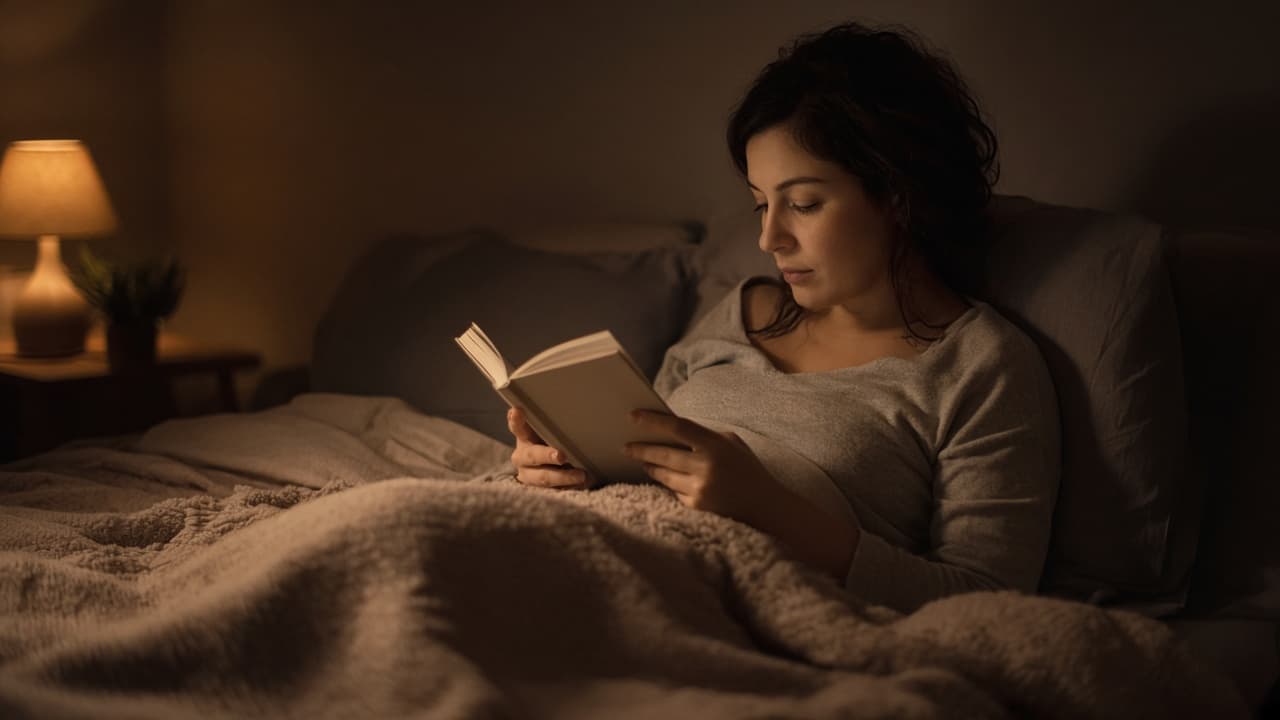
Sleep advice can feel preachy. This is narrower: ten minutes of breath before lights out, phone in another room. We reach for 4-7-8 breathing first; if the holds feel stressful, switch to plain deep breathing with a longer exhale only.
A simple night sequence
- Dim lights; sit on the bed edge instead of scrolling.
- Four rounds of 4-7-8—or exhale-focused breath if holds spike anxiety.
- Two minutes of relaxation techniques you already know by heart.
- Lie down; let the breath find its own pace.
Related reads
For daytime stress that bleeds into night, see breathing for anxiety. For a morning counterpart, try a morning breath routine.
When your mind races anyway
Keep the body still but let thoughts pass like subtitles—you do not need a blank mind. Return to exhale length instead of fighting images.
If you are still awake after twenty minutes, leave the bed briefly (dim light, no phone scroll) and try one more short round of relaxation techniques before lying down again.

In practice this week
Dim screens thirty minutes earlier than you think you need. Breath cannot fight blue light alone. Layer 4-7-8 Breathing after the screen boundary.
If you wake at 3 a.m., avoid checking the clock. One slow exhale cycle per lie-down keeps arousal from spiking again.
- Set a single daily alarm for breath—not three alarms you will snooze.
- Write one sentence after each session: mood, tension, or sleep quality.
- If this pattern feels tight, switch to 4-7-8 Breathing for a day.
Common mistakes we see
- Chasing long sessions before short ones feel easy.
- Breathing through the mouth when the nose works fine.
- Skipping days because yesterday was not perfect.
If you catch yourself doing any of the above, shorten the session and try Relaxation Techniques. Progress looks like returning sooner after a skipped day—not flawless streaks.

Questions readers ask
How long should I practice breathing before sleep each day?
Start with two to five minutes. Double the time only when the shorter session feels automatic for a full week. On busy days, one minute still counts as showing up.
What if I feel dizzy or more anxious?
Shorten the exhale, drop breath holds, or breathe normally for sixty seconds before trying again. Read when breath feels awkward and switch to 4-7-8 Breathing if needed.
Can I combine this with the mobile app?
Yes—use the web timer here for quick sessions and the Breathly app when you want scenes, sound, or longer programs. The technique is the same; the container changes.
Further reading on Breathly
Continue with 4-7-8 Breathing, Relaxation Techniques, and Deep Breathing. Each guide includes its own timer and photos so you can stay in one calm thread instead of bouncing across generic lists.
Browse the full journal or open the technique index when you want a structured pick list.
About the Author
Breathly editorial—written from lived trial and error, not sleep-hygiene lectures.